
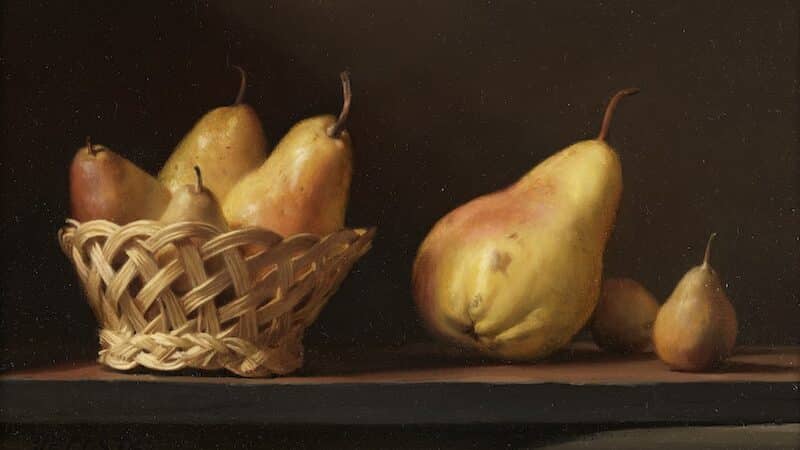

Still life painting looks peaceful from the outside… until you start arranging objects and suddenly feel like an interior designer hired by a bowl of pears with opinions. But composition is where the magic begins — the point where light, form, and intention find their footing before a single brush touches paper.
Here’s a thoughtful walk-through building strong, expressive still-life compositions that feel sculpted by light itself.
Start With a Story, Not With Stuff
Every compelling still life begins with why.
Before you chase perfect angles, ask: What is this arrangement saying?
- Is it about transience? → Use wilting flowers, tarnished metal, soft shadows.
- Is it about celebration? → Brighter objects, rhythmic diagonals, uplifted forms.
- Is it about quiet contemplation? → Low chroma, few objects, simple geometry.
Your story helps eliminate clutter and choose a visual direction.
Work in Shapes, Not Objects
Give your brain a break and squint. You’re not arranging a teapot, an apple, and a copper pot — you’re arranging:
- A circle
- A triangle
- A vertical block
- A shadow shape that binds them
Intense compositions rely on shapes that interlock. Objects should support each other visually, not float like introverts at a cocktail party.
Use the “Three Anchors” Rule
Think of a great still life as having three visual anchors:
- Primary anchor – the star (brass pot, rose, crystal glass)
- Secondary anchor – supports the star (fruit, book, folded cloth)
- Shadow anchor – the quiet base that ties everything together
This prevents the “museum gift shop display” effect, where everything screams for attention.
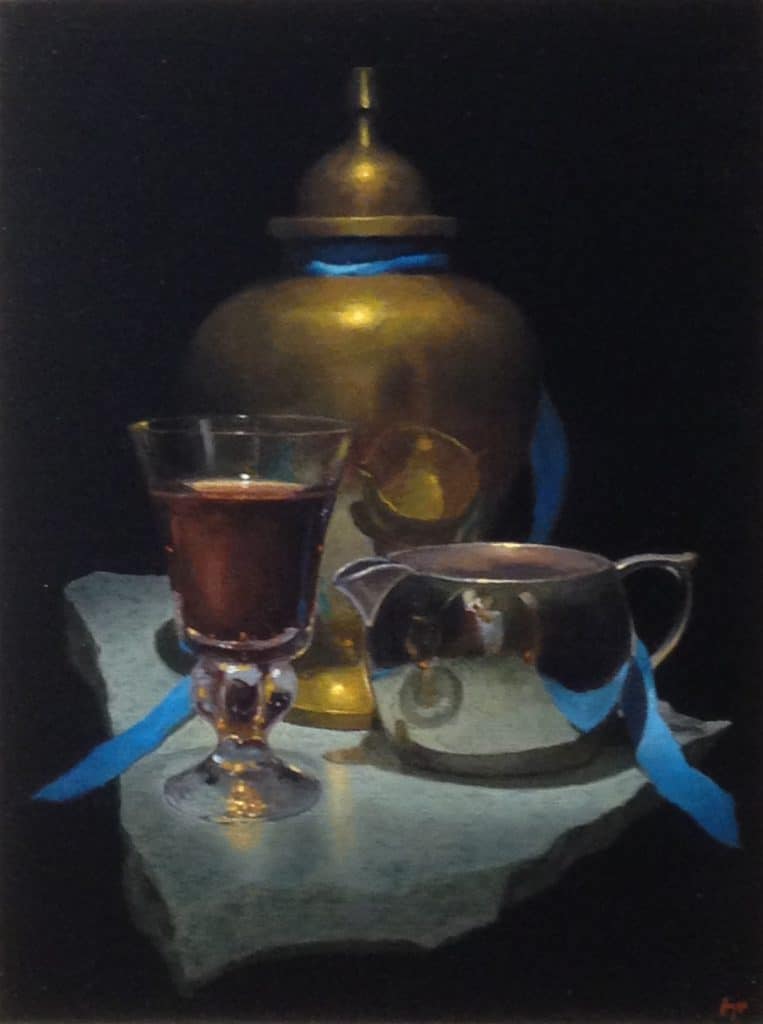
Primary Anchor
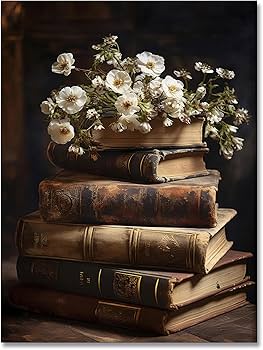
Secondary Anchor
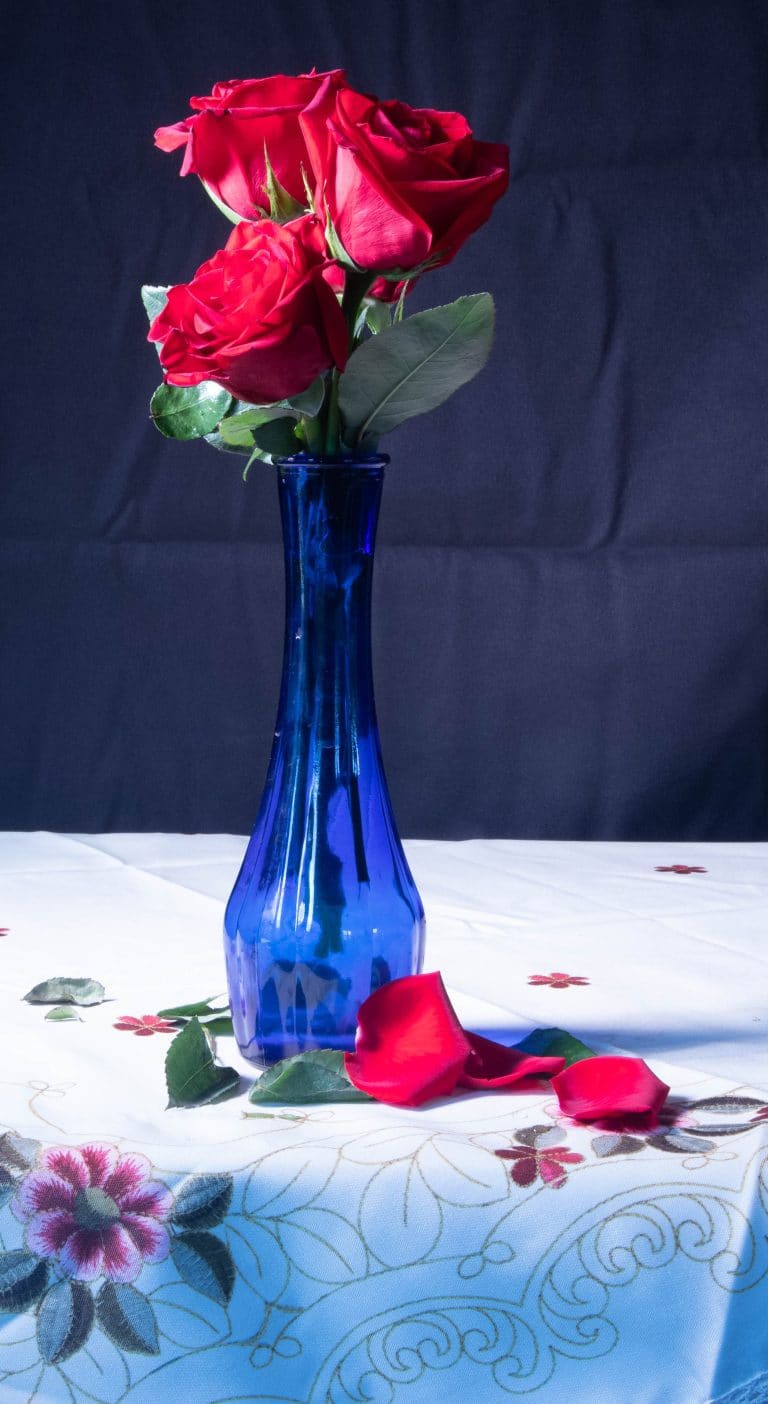
Shadow Anchor
Control Your Triangles
Whether you favor Renaissance stillness or Baroque drama, triangles remain the backbone of powerful arrangements.
- Upright triangle → Stable, serene, classic
- Inverted triangle → Tension, movement, dynamism
- Long diagonal triangle → Guiding the eye through storytelling
Try placing your tallest object slightly off-center to avoid symmetry that feels stiff or staged.
Light: Your Invisible Sculptor
Still life is really about how light plays across surfaces.
Tips for shaping with light:
- Side lighting creates depth, drama, and crisp shadow edges.
- Top lighting is elegant but flattening — great for reflective metal.
- Backlighting gives halo-glow edges perfect for glass and flowers.
- Dark backgrounds amplify value contrasts and color saturation.
Move a single lamp around your setup. Watch how identities change.
Value First, Color Later
You can arrange the most beautiful palette in the world… and it will still fall apart if the value structure is weak.
Ask yourself:
- Do I have a clear hierarchy from light to dark?
- Is there a value “path” the viewer can follow?
- Do shadows tie the objects together instead of isolating them?
A quick phone snapshot, converted to black and white, tells you everything.
Texture Relationships Add Interest
Your compositions become richer when textures play off one another:
- Smooth (porcelain) against rough (linen)
- Reflective (copper, silver) against matte (fruit, wood)
- Granular (flowers, foliage) against solid planes (books, boxes)
Texture maintains visual rhythm and gives your painting micro-events to explore.
Leave Space for Breath
Beginners overcrowd. Masters under-state.
A still life with negative space isn’t empty — it’s quiet.
That quiet lets your highlights, edges, and forms sing.
Final Tip: Build the Scene as a Painter, Not a Photographer
Photography chases the moment.
Painting creates the moment.
Feel free to exaggerate distances, heighten relationships, or shift objects subtly to harmonize the design. You’re sculpting light — not documenting a crime scene.
