
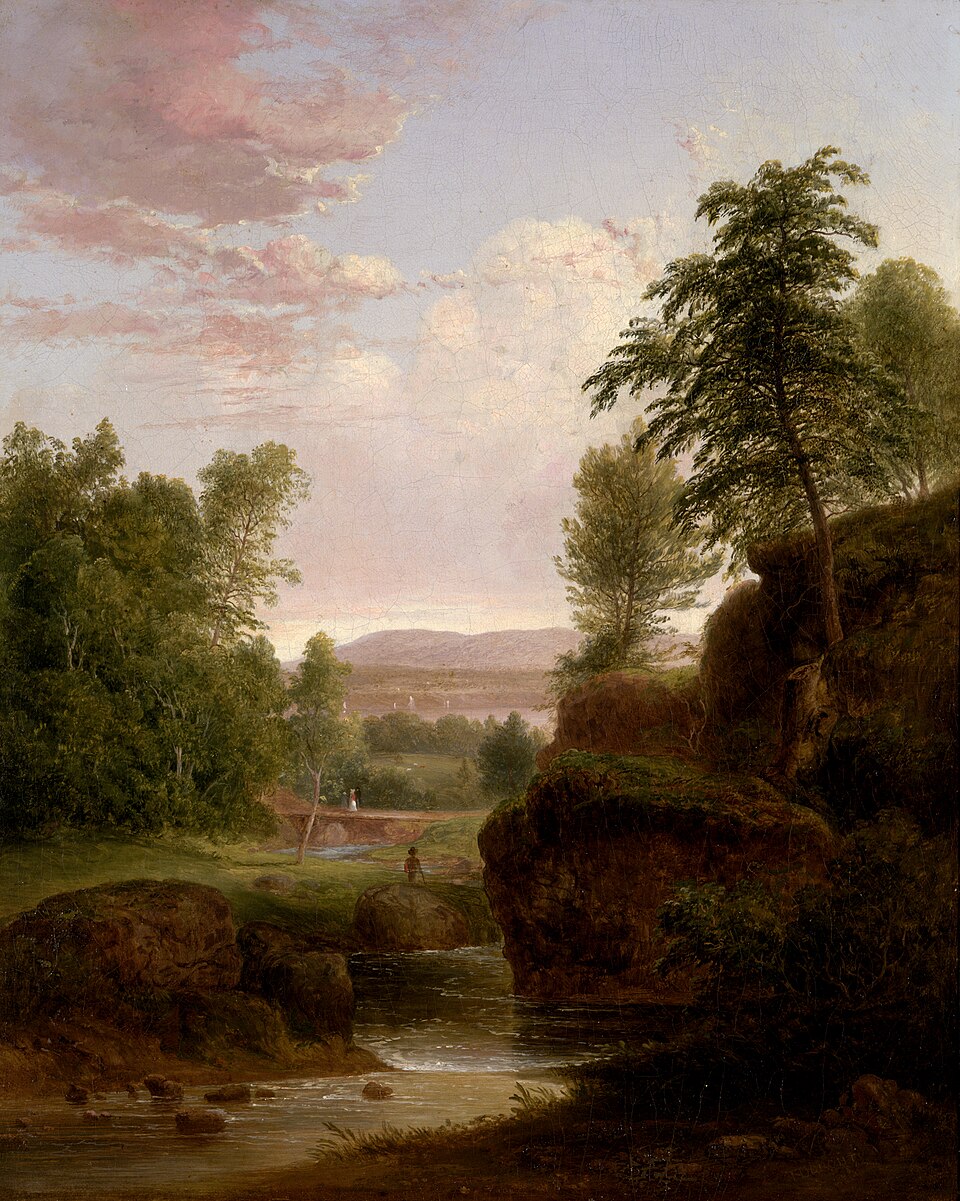

Long before the grand, theatrical canvases of the Hudson River School took center stage, Thomas Doughty (1793–1856) was quietly shaping the very idea of what American landscape painting could be. If you imagine the American wilderness as a stage, Doughty was the artist who gently raised the curtain.
His paintings radiate a kind of soft-spoken poetry—calm rivers, gentle hills, delicate atmospheric haze. He wasn’t chasing the sublime thunderstorms or cathedral-like mountains that later painters adored; instead, he offered America a landscape imbued with serenity, contemplation, and a prayerful stillness.
A Self-Taught Visionary
Born in Philadelphia and trained as a leatherworker, Doughty had no formal art schooling, which makes his artistic emergence all the more astonishing. He educated himself through observation—endless walks along rivers, studies of light on foliage, the shifting moods of early morning mist.
And it shows. There is a humility in his work that feels deeply American: quiet confidence, honest craftsmanship, and reverence for creation.
The First True American Landscape Painter
What sets Doughty apart is simple and profound:
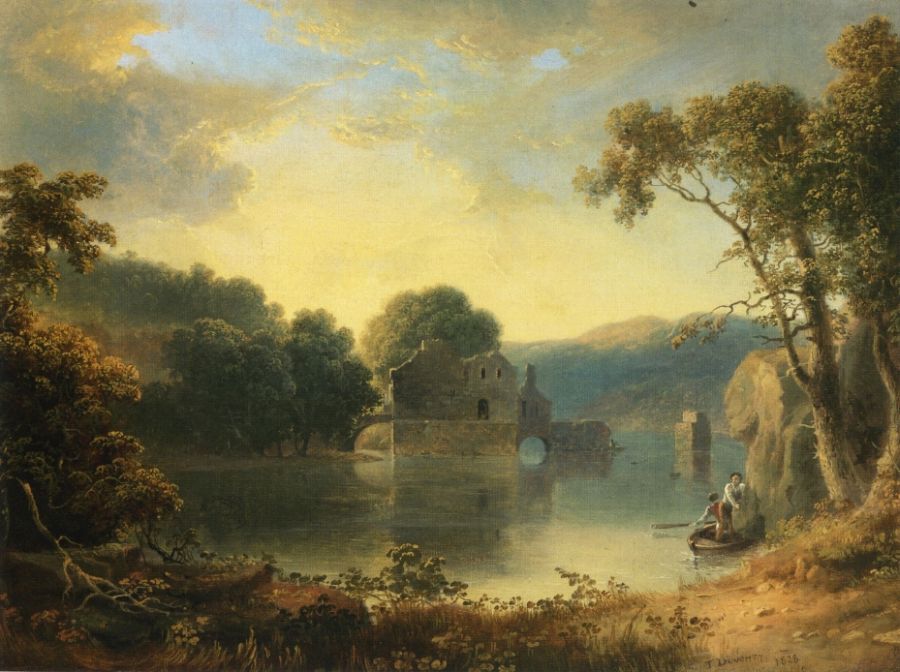
He was the first American painter to make landscapes his primary subject.
Before him, portraiture ruled the art scene. But Doughty looked outward—toward forests, rivers, and valleys—and declared them worthy of artistic devotion. His landscapes were not mere backdrops; they were the story.
This shift helped spark what would later evolve into the Hudson River School, America’s first homegrown artistic movement. While Thomas Cole and Asher B. Durand would push the movement into the realm of grandeur and spiritual transcendence, Doughty’s groundwork created the vocabulary they would expand upon.
Atmosphere as Emotion
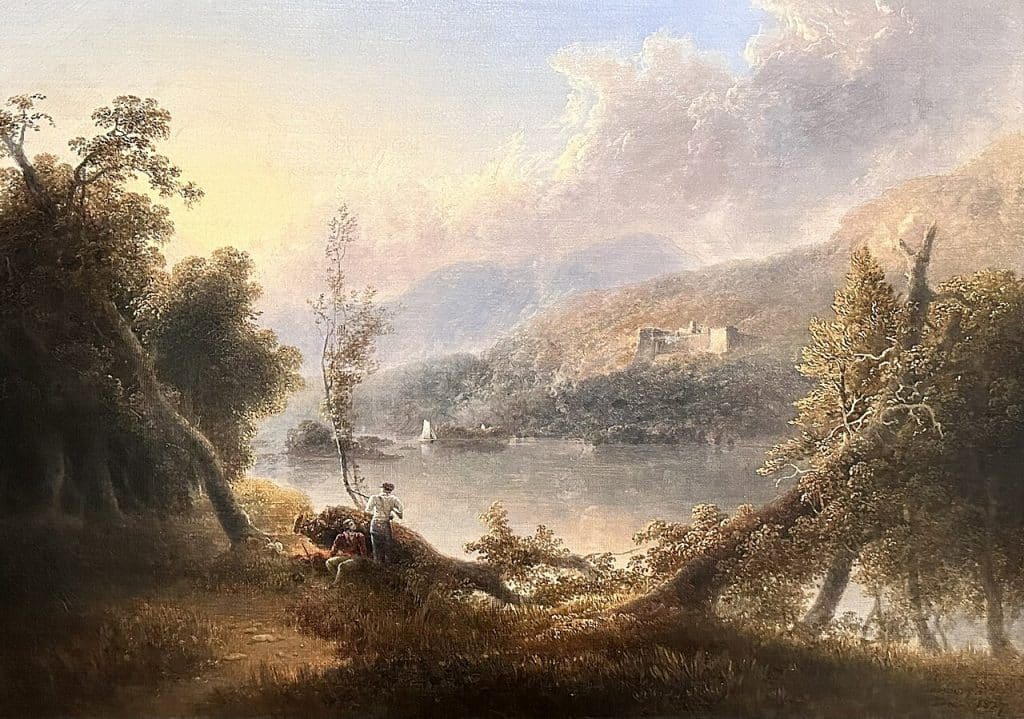
Doughty had an uncanny ability to paint air—the breath between trees, the luminous softness that hovers over a river at dawn. His palette leans toward misty blues, gentle greens, and honeyed neutrals.
He invites the viewer to slow down…
to breathe…
to step into a world still unsullied by industry, noise, or haste.
If Cole was the dramatist of American landscape, Doughty was its lyric poet.
A Bridge Between Worlds
Stylistically, Doughty drew inspiration from British Romanticism, particularly artists like Constable. But he translated that sensibility into something distinctly American—less polished, more intimate, and anchored in the wilderness he knew so well.
By doing so, he bridged two continents and helped define the early visual identity of the United States.
Why Doughty Still Matters
In an age overloaded with bold colors and digital immediacy, Doughty’s paintings feel like exhalation. They remind us that quiet does not mean small, and subtlety does not mean weak.
His works express:
- Reverence for the natural world
- A contemplative spiritual tone
- The beginning of landscape painting as a national language
For painters today—especially those working in watercolor or atmospheric studies—Doughty offers a masterclass in mood, restraint, and whispered beauty.
